
Ethanol, data centers, or drinking water to survive?
How does India prioritise?

Nikhil Sharma moved his family to a new-build society on the outskirts of Pune four years ago, sold on the same pitch every young IT professional knows: wide roads, a clubhouse, “24x7 water supply” in bold on the brochure.
For two years, that mostly held. Then the tankers started showing up - once a month, then twice a week. By early 2026, his RWA WhatsApp group had a standing agenda item unthinkable in a “modern” township: water rationing, morning and evening, no clear explanation offered.
It was months later, scrolling past a report on a new “AI-ready” data center coming up fifteen kilometres away, that Nikhil put two facts together: a facility that would eventually draw crores of litres a year, and a society that couldn’t get water for more than four hours a day.
He did what any of us would do. He got angry at the data center.
Quick note before we go further. This is Part 1 of a two-part series. Today is the diagnosis. Next Saturday, Part 2 goes looking for the prescription.. and the portfolio.
He was probably wrong to, at least for the reason he thought. And that’s the whole problem with this story right now. Everyone is measuring the wrong thing, worrying about the wrong villain, and missing a bigger story unfolding quietly across boardrooms in Jamnagar, Chennai and Hyderabad.
This is that story.
The lesson America already learned
India didn’t invent this panic. It imported it.
American local news has spent the last year producing viral clips of cloudy tap water held up next to gleaming data centers, residents describing a hum that never stops, a Congress member holding up a “coincidentally” murky well near a construction site. “AI is drinking our water” became received wisdom within a few news cycles.

Except the numbers tell a messier story.
Headlines routinely conflate two very different things:
Water withdrawal — pulled from a river or aquifer
Water consumption — the fraction actually lost, usually to evaporation
A system that draws water but returns most of it is a different animal from one that consumes it outright, and blurring the two makes for a terrifying headline and a misleading conclusion.
Run the real comparison, and America’s entire data center fleet, projected to 2028, consumes a rounding error’s worth of the country’s total water use — dwarfed by golf courses and lawns alone.
Even the viral claim that a Utah mega-campus would release the heat of “23 Hiroshima bombs” every day is actually less than the amount of heat the same desert naturally absorbs from the sun daily.
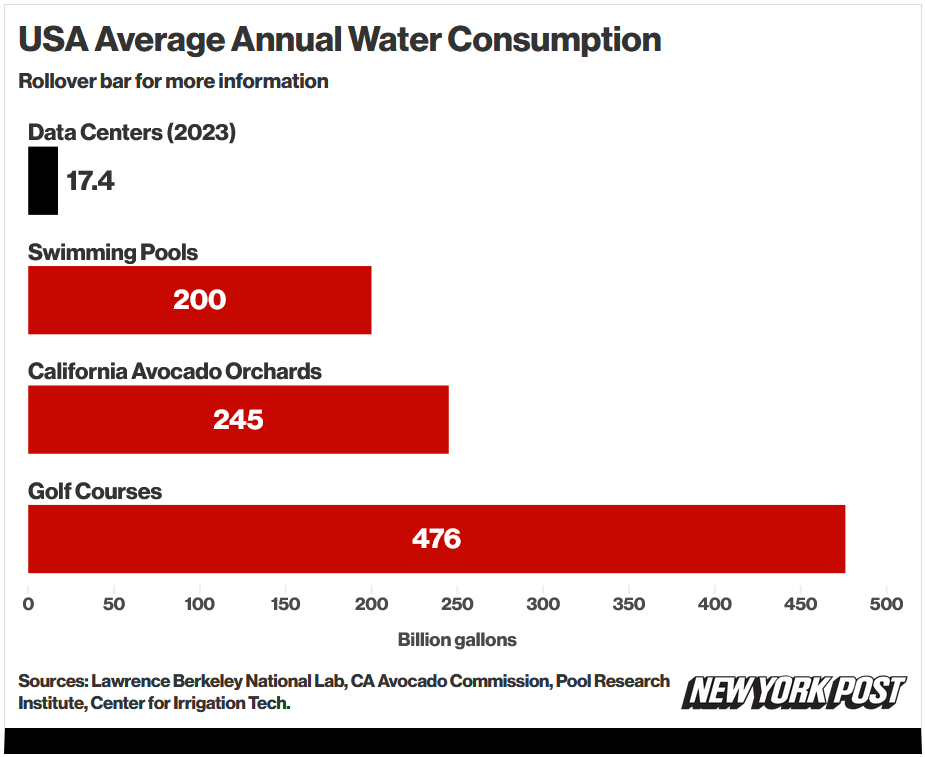
None of this makes American data centers blameless. It means the specific accusation that they’re uniquely draining drinking water, mostly doesn’t hold up.
The real story in the US was never water. It was power. Data centers are on track to consume roughly a sixth of all American electricity within a few years, straining grids and spiking local bills by double digits. Water became the emotionally satisfying scapegoat; power was the structural problem quietly reshaping state economies.
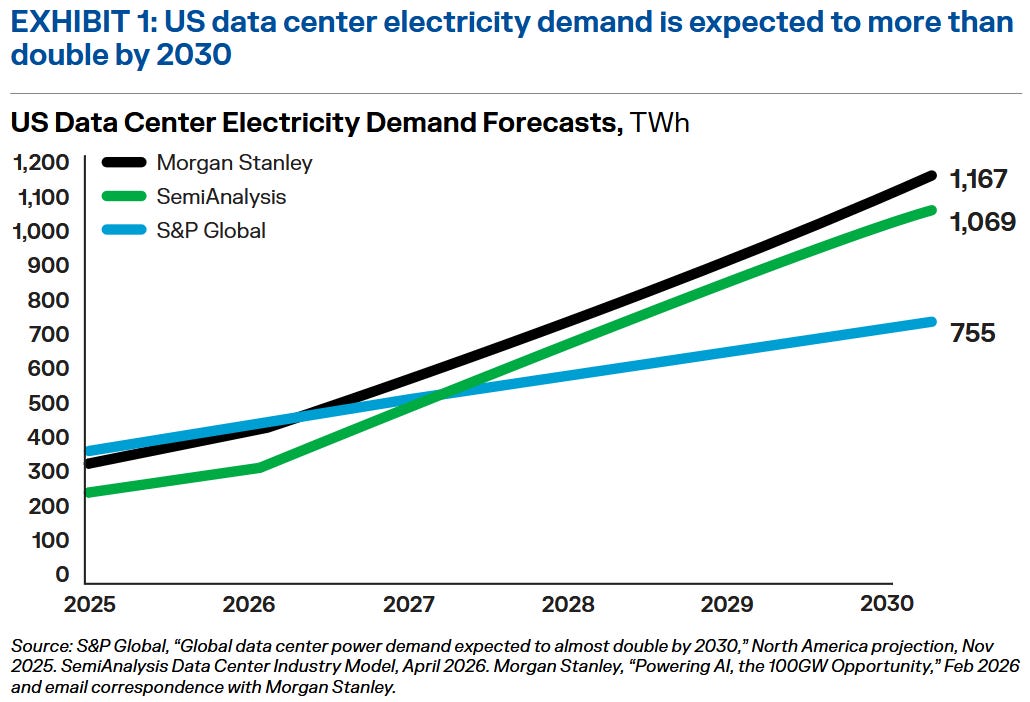
That’s a useful lesson and a dangerously comfortable one to import wholesale into India, because the baseline that makes America’s water math forgiving is exactly the baseline India doesn’t have.
Why the comfort doesn’t travel
India holds roughly 18% of the world’s population on about 4% of its freshwater.
The World Bank has flagged that by 2030, India risks crossing from “water-stressed” into genuinely “water-scarce” territory.
Twenty-one major Indian cities including Delhi, Bengaluru, Chennai, Hyderabad among them, are already flagged for critical groundwater depletion.
Chennai and Bengaluru have each lived through their own “Day Zero.” This isn’t a projection anymore; it’s recent memory.
Onto this baseline, India is now stacking several enormous new claims on the same shrinking pool of groundwater and almost nobody is looking at them together.
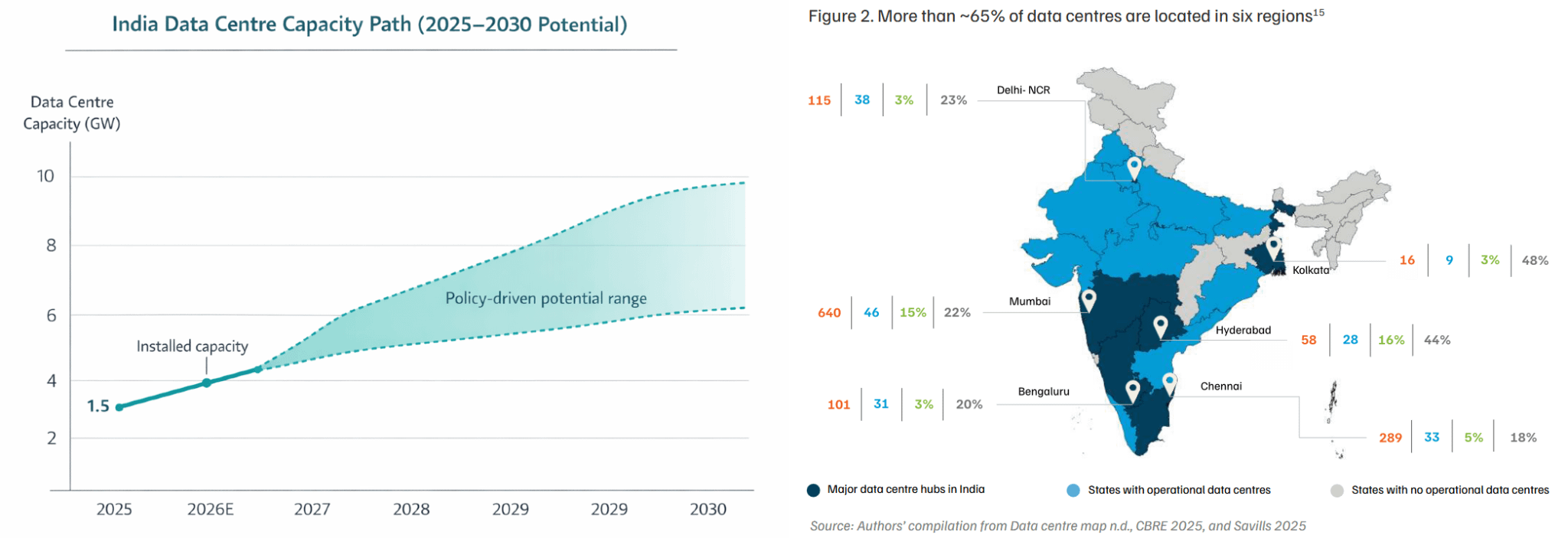
Claim one: the data center buildout itself. Installed capacity has roughly tripled since 2020, with Alphabet, Microsoft, Amazon and Meta collectively pledging tens of billions of dollars into Indian campuses in the past year. The geography isn’t accidental: nearly all of India’s international bandwidth physically lands in Mumbai and Chennai, which is why capacity clusters there and along the line running through Pune and Hyderabad, precisely the cities already closest to the edge on water.
Claim two, almost nobody connects to the first: India’s ethanol blending program. Sold as an energy-independence win and by some genuine metrics, it has been one, cutting the crude import bill and reaching farmers years ahead of schedule. It has quietly become one of the country’s largest new agricultural water draws:
A litre of ethanol from sugarcane costs over 3,000 litres of water
From maize, over 4,000 litres
From rice, north of 10,000 litres. And that rice increasingly includes grain diverted from subsidised ration stock meant for the country’s poorest, now competing with distilleries in water-stressed Maharashtra and Uttar Pradesh
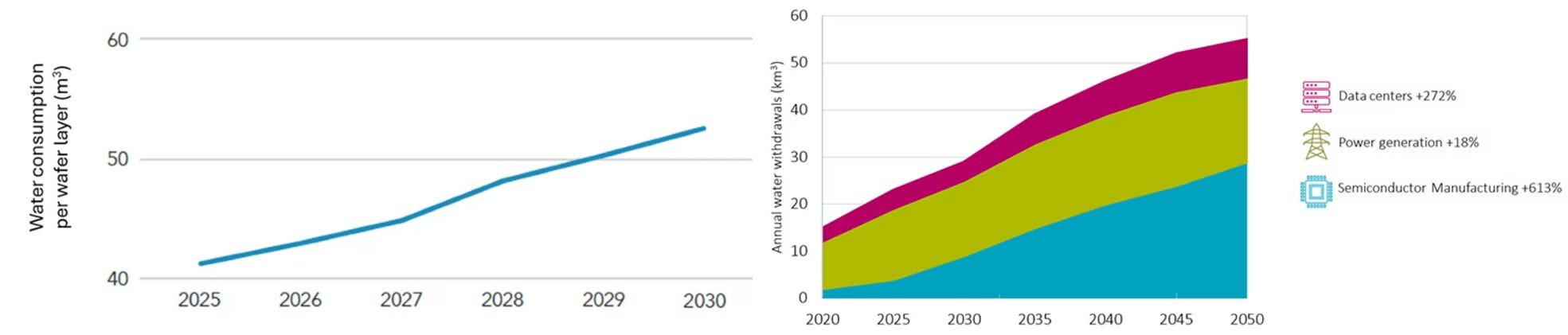
Layer semiconductor fabrication on top - a single plant can use as much daily water as tens of thousands of households and the actual shape of the problem emerges.
It was never one villain draining one well. It’s three separate “self-reliance” stories, each covered by a different set of journalists, each quietly opening its own tap on the same aquifer.
The fixes, and their catches
Nobody building this future is pretending the water problem doesn’t exist. Four fixes are on the table, each with a catch the press release skips.
Renewables solve generation, not storage. Solar disappears every night, and without serious grid-scale storage, “bullish on renewables” is a half-answer.
Nuclear has real physics on its side, but the constraint isn’t fuel, it’s time: reactors take a decade-plus to build, while data centers go live in under two years.
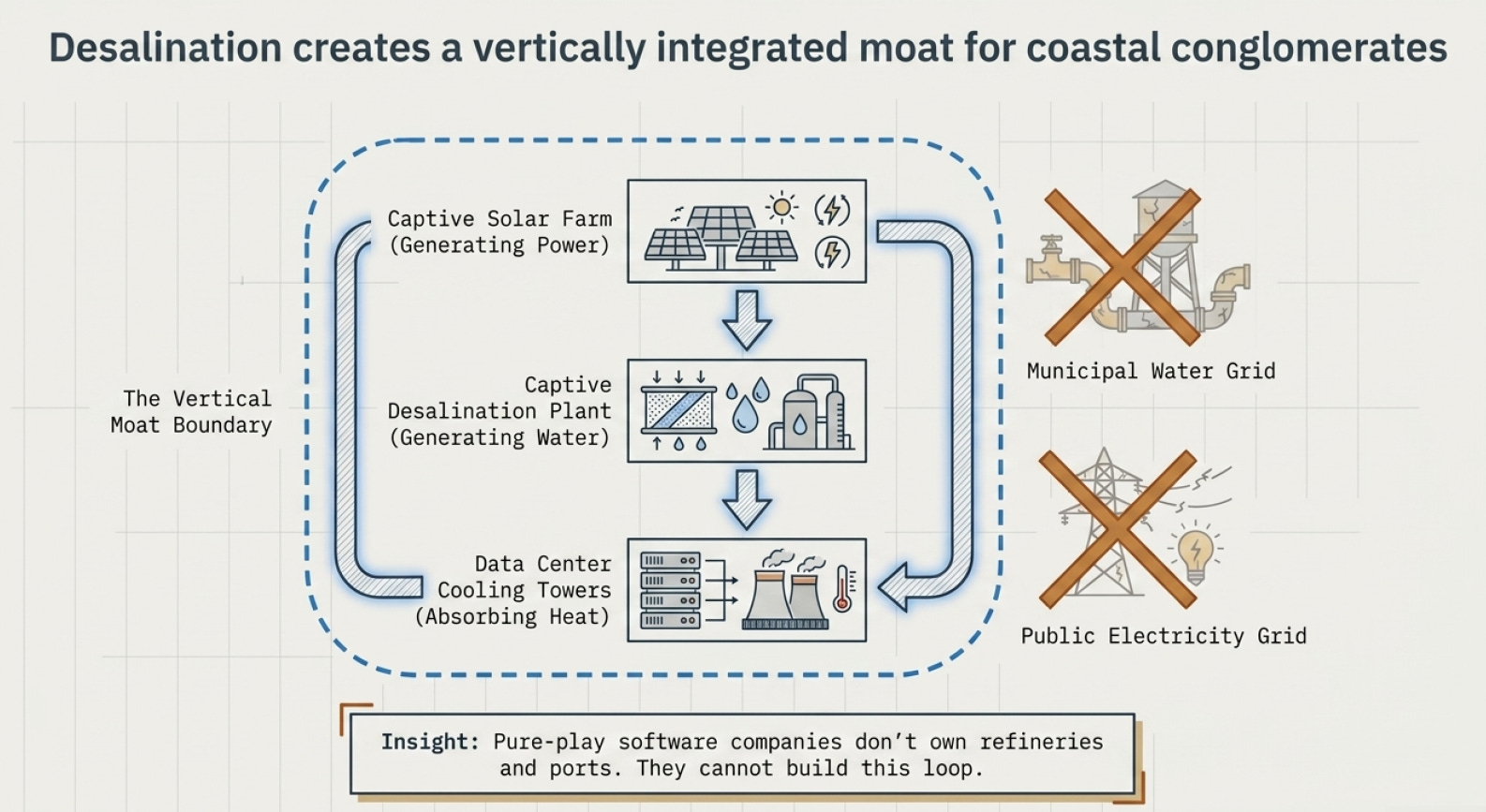
Desalination is generating real excitement, and it’s already happening. Tamil Nadu has built capacity since a 2019 near-crisis, and Reliance is building seawater cooling into Jamnagar using infrastructure that traces back to its refinery operations. The interesting part: Reliance and Adani are also India’s largest renewable developers, meaning they can run captive solar to power captive desalination to cool captive data centers, sidestepping both the water grid and the power grid at once.
That’s a vertically integrated moat decades in the making, exactly why Microsoft or Google, owning no refineries or ports, can’t easily replicate it. It will likely rescue coastal India. It does nothing for landlocked Hyderabad or Bengaluru, and its brine byproduct carries its own marine-ecology cost nobody’s fully priced in.
Treated wastewater (”grey water”) reuse for cooling is the cheapest fix and it’s sitting right there, mostly ignored. A few Navi Mumbai operators already run cooling on treated water at lower cost. Industry-wide adoption remains the exception; most operators, even ones marketing sustainability, still won’t disclose actual consumption numbers.
When the easiest fix is also the most avoided, that tells you how “sustainability” is really weighed against margin.
Three ways this plays out
The vertically integrated model becomes the template, and India’s water map starts mirroring its wealth map. Coastal capital builds its way out with captive solar and desalination, inland hubs absorb the stress with nothing but hope.
India’s backlash cycle arrives on a delay in the same way it did in Georgia and Virginia, except with far less water margin and far less patience.
The scenario worth actually rooting for: regulation moves before the crisis lands — real disclosure requirements, mandatory grey-water adoption, siting rules — turning “we need our own data centers for sovereignty” from a talking point into an actual design constraint.
Which wins won’t be decided by any company’s press release. It’ll be decided by whether India’s regulators move at the speed its builders already are and on current form, that’s not a bet I’d take lightly.
The trade hiding underneath
Here’s what should matter most to you as an investor, and it has nothing to do with picking a side.
Whatever happens to the AI buildout, India’s water infrastructure gap isn’t going away, and someone has to build the plants and pipes that close it, regardless of who’s asking for the water.
That’s not a small market. India’s water treatment capex is on a multi-year, government-led upcycle, with the relevant ministry’s budget roughly tripling in recent years and several lakh crore of fresh investment expected over the next five. The EPC contractors, water-infrastructure specialists and pipe manufacturers sitting in this chain are largely absent from retail conversation right now, overshadowed by the louder AI story sitting on top of them.
Not every name here is equally well run, and this isn’t a call to buy blind — but structurally, it’s about as close to a picks-and-shovels trade as this decade’s water story gets. Regardless of who wins the AI infrastructure race, someone still has to solve for the well running dry.
That trade deserves more than one paragraph, though, which is exactly why it isn’t getting one today. Part 2 goes into the actual value chain - who’s sourcing the water, who’s treating it, who’s moving it, which listed names have order books worth tracking and which have balance.
Consider today’s piece the appetiser nobody asked for and the main course still cooking.
____________________________________________________________________
Weekends are for the deep dives, when you can afford to disappear into a rabbit hole for twenty minutes guilt-free. The other five days, that guilt-free window doesn’t exist, so we’ve moved to Instagram for those hours, same second-order thinking, just small enough to sneak in between meetings without anyone accusing you of “multitasking”: @capital_quill.
This is a magnificent, system-level diagnostic of India's zero-sum resource architecture. Highlighting the physical collision where state-mandated biofuel feedstock targets and hyperscale computing footprints fight for the exact same hydrological floor hits the absolute core of why linear macroeconomic political models experience deep variance.
Mainstream forecasting frameworks routinely treat regional development as an unconstrained, flat variable.
On substack.com/@electoralindex we run demographic survey raking to track the unvarnished "Resource Friction Index" at the sub-regional level. When an infrastructure cluster—like data center nodes in Navi Mumbai or Chennai, or ethanol processing belts in western Maharashtra—compresses the local water table, it alters the baseline household ledger overnight. By re-weighting our sampling matrices to isolate the specific zones where industrial utility directly squeezes civic drinking supply, we can map true ground-level voter volatility long before traditional polling fields aggregate flat data.